Objets: 1 - 1 Sur 1
Albaranes Art
Créations Sculpture & Design
FORMATION :
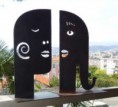
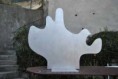
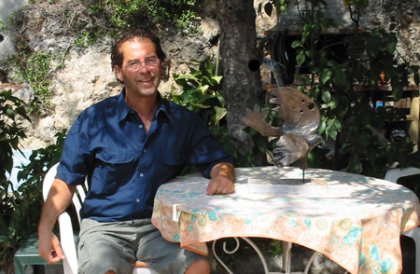
Autodidacte. Educateur pour enfants Sculpte depuis 2002 EXPOSITIONS : Expositions personnelles Galerie De Lille 2004 2005 Marché d’Art Contemporain Evian 2005 Marché Artistique Antibes 2005 Marc ALBARANES travaille la terre souvent d’une blancheur fragile, immaculée.Une inspiration tournée vers la nature, et l’homme. Des symboliques qui veulent faire réagir le spectateur : personnages écartelés, bestiaire inquiétant. Mais aussi des œuvres reposantes à la plastique immobile comme pour nous faire reprendre notre souffle .
Publié lors de l'exposition Villa Barbary (Carros)
André Appert, commissaire de l’exposition .
Critique d' art :
L'art de Marc Albaranes surgit comme une résurgence de l'archaïque dans le contemporain, une tentative rare de restaurer la dimension spirituelle de la forme à une époque où l'art est trop souvent réduit à un simple signe culturel. Ses sculptures ne se contentent pas d'exister dans l'espace : elles semblent se souvenir d'un temps antérieur à l'histoire, d'un temps où la forme était encore un acte de survie psychique, un moyen de tenir ensemble ce que l'angoisse menaçait de dissoudre.
Ce qui traverse immédiatement son œuvre, c'est la puissance biomorphe des formes. Elles ne sont pas des citations de styles primitifs - africains, crétois ou cycladiques - mais les symptômes d'un retour du fondamental, d'un inconscient collectif que l'artiste ne copie pas mais réactive. Les silhouettes féminines, animales, totémiques, ne sont pas figuratives : elles sont transfiguratives. Elles incarnent ce que Melanie Klein appelait la tentative de réparer l'objet interne, de recomposer une unité psychique menacée par la fragmentation.
Dans les sculptures d'Albaranes, le vide et le plein ne sont pas des choix formels : ils sont les deux pôles d'un conflit intérieur. Le vide n'est jamais absence ; il est respiration, ouverture, passage. Le plein n'est jamais masse ; il est affirmation d'existence. Leur tension crée une dynamique qui rappelle les premières tentatives humaines de donner forme à l'invisible. L'artiste ne modèle pas la terre : il négocie avec elle, comme si chaque sculpture était le résultat d'un pacte fragile entre la matière et l'esprit.
Cette dimension spirituelle n'a rien de religieux. Elle relève plutôt de ce que j'appellerais une métaphysique du contact : toucher la terre pour toucher l'origine. Dans un monde saturé d'images, Albaranes choisit la lenteur, la densité, la verticalité humble. Ses formes dressées ne cherchent pas à dominer l'espace ; elles cherchent à s'y tenir, à y trouver une place juste, presque éthique.
Ses dessins et peintures prolongent cette quête. Les nus féminins, empreints d'une naïveté volontaire, ne sont pas des corps : ce sont des présences psychiques, des fragments d'âme. Les En cela, Marc Albaranes appartient à la lignée rare des artistes pour qui la création n'est pas un commentaire sur le monde, mais une transmutation de l'être. Son œuvre rappelle que l'art véritable ne parle pas de la réalité : il parle de ce qui, en nous, cherche encore à naître.harmonies chromatiques, parfois proches de Nicolas de Staël, ne relèvent pas de l'influence mais d'une même nécessité : condenser l'émotion, la rendre presque minérale. Le rêve, chez Albaranes, n'est pas un refuge mais un laboratoire intérieur, un lieu où les formes se recomposent avant de revenir au monde.
Ce qui rend son œuvre profondément contemporaine, c'est qu'elle refuse la superficialité postmoderne, le cynisme, l'ironie. Elle affirme que l'art peut encore être un acte de guérison, un travail de réparation intérieure. Dans un paysage artistique dominé par le spectaculaire, Albaranes choisit la présence, la gravité, la transformation silencieuse. Ses sculptures ne cherchent pas à séduire : elles cherchent à réconcilier.
En cela, Marc Albaranes appartient à la lignée rare des artistes pour qui la création n'est pas un commentaire sur le monde, mais une transmutation de l'être. Son œuvre rappelle que l'art véritable ne parle pas de la réalité : il parle de ce qui, en nous, cherche encore à naître.
Monaco, D K. 2019
